Argentina Entry Requirements 2026: 90 Days Visa-Free, the AVE, and What Actually Trips People Up
Quick answer
US, Canadian, UK, EU, and Australian passport holders enter Argentina visa-free for up to 90 days in 2026, with no reciprocity fee and no online arrival form. The stay can be extended once through the immigration office before it expires. Argentina's AVE electronic authorization only applies to nationalities that otherwise need a visa.
Citizens of the United States, Canada, the United Kingdom, Australia, and most of Europe do not need a visa to visit Argentina in 2026. You get up to 90 days as a tourist, the old reciprocity fee is gone, and there is no arrival card or electronic authorization to complete before you fly.
That makes Argentina an outlier right now. While Asia has spent two years wrapping arrival cards, levies, and QR codes around its borders, and Europe phases in biometric checks and ETIAS, Argentina asks for a passport, stamps it, and waves you through. The things that genuinely trip travelers up are different: an electronic authorization that gets sold to people who do not need it, a two-airport arrangement in Buenos Aires, and money logistics in a country whose payment habits have changed quickly. Taking those in order sorts out most of the planning.
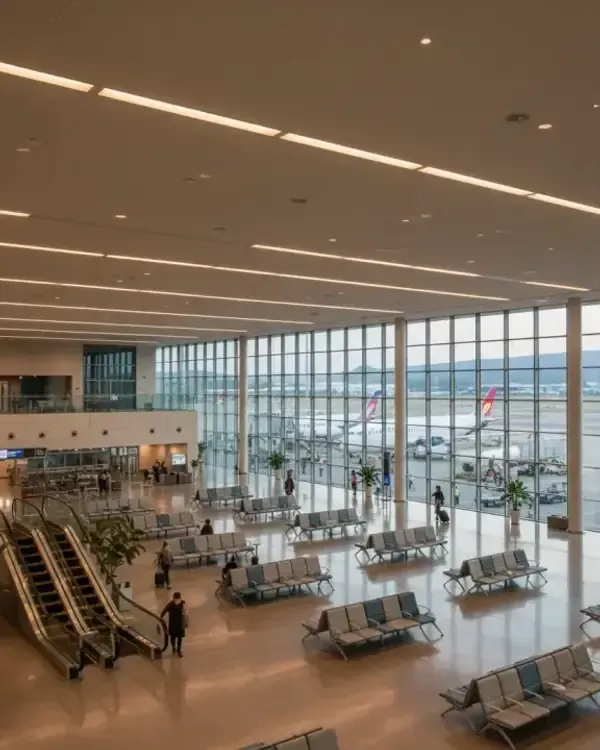
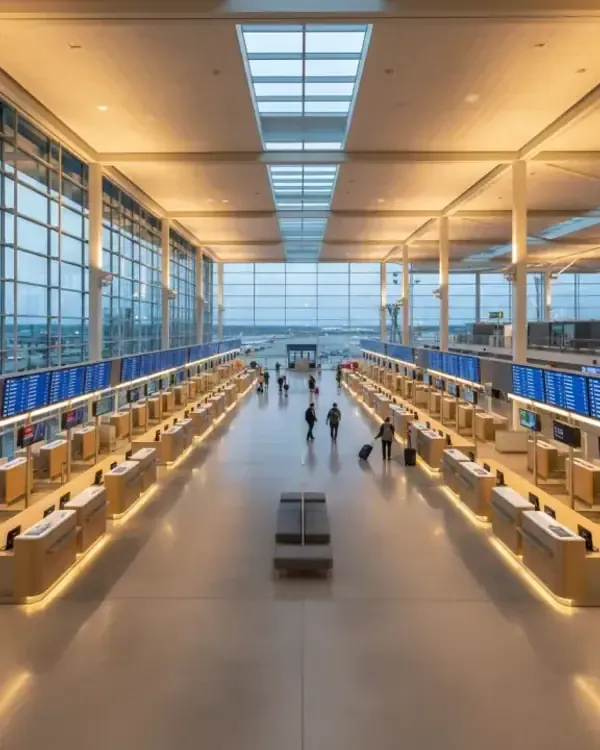
*Images are illustrative and may differ from actual lounges and airport facilities.
The Baseline: 90 Days on a Stamp
The US State Department's country page for Argentina lists the tourist requirements in three short lines: no visa needed for visits of 90 days or less, a passport valid at the time of entry, and at least one blank page for the entry and exit stamps.[1] No vaccinations are required for entry either.[1] Unlike several of its neighbors, Argentina does not currently ask visitors to fill in any online declaration or arrival form before the flight. Your paperwork is your passport.
Canadians get the same deal, and it is worth saying explicitly because Canada spent years on the wrong side of Argentina's old reciprocity fee. The Consulate General of Argentina in Toronto now states it plainly: Canadian nationals do not need a tourist visa to enter Argentina, nor do they need to pay a reciprocity fee.[3] That fee, which once mirrored what Argentines paid for visas to the US, Canada, and Australia, is no longer collected from visa-exempt tourists. If a website is quoting you a mandatory government entry fee for an American or Canadian passport, you are on the wrong website.
The full exemption list is long and includes the UK, the EU, Australia, New Zealand, Japan, and most of Latin America. If you hold a passport from anywhere else, check the list published through Argentina's migration authority rather than assuming either way.[3]
The AVE: An eTA Most Readers Should Ignore
Search for Argentina entry rules and you will quickly meet the AVE, short for Autorizacion de Viaje Electronica, usually presented by third-party visa sites as something every traveler must buy. It is not. The AVE is Argentina's electronic authorization for citizens of roughly 75 countries whose passports normally require a consular visa.[4] For those travelers it is genuinely useful: instead of an embassy appointment, they can apply online if they hold a valid US visa in categories like B2, B1, J, O, P, E, or H-1B, though a green card does not qualify.[4] An approved AVE allows a stay of up to three consecutive months with multiple entries and exits.[3]
If your passport is American, Canadian, British, European, or Australian, none of that applies to you. You are visa-exempt, so there is nothing to apply for and nothing to pay. The lookalike sites that charge a service fee to "process" an authorization for visa-exempt nationalities are selling paperwork that does not exist. Book with the airline, bring the passport, done.
Staying Longer Than 90 Days
Argentina's immigration authority defines a tourist's authorized stay as up to three months, extendable once for a similar period.[2] The extension, called a prorroga, is handled by the Direccion Nacional de Migraciones at its Buenos Aires headquarters or at regional delegations around the country, and the application has to happen before your current stay runs out.[2] Do not let the deadline pass while you think about it. Once the authorized period has expired, the rules say it can no longer be extended at all, and the remaining path is an exit authorization that gives you ten days to leave the country.[2]
Six months on a tourist stamp is generous by any standard, and it is one reason Buenos Aires has become such a magnet for long-stay visitors and remote workers. If your plans run longer than that, Argentina also operates residence categories including a digital nomad permit, which are worth researching through official channels well before you fly rather than improvising at the border.
Money: Simpler Than the Internet Suggests
A few years of dramatic economic headlines left the internet full of outdated advice about bringing envelopes of hundred dollar bills to Argentina. The practical picture for a 2026 visitor is far more ordinary. Cards are widely accepted in Buenos Aires and the main tourist cities, contactless payment is routine, and the gap that once made cash exchange dramatically better than card rates has narrowed enough that convenience can win. A sensible setup is one no-foreign-transaction-fee card as your workhorse, a backup card, and a modest amount of cash for taxis, small shops, and markets. Check the current exchange picture shortly before you travel, because Argentine monetary policy moves faster than travel articles do.
Two boring rules still matter. First, if you carry 10,000 US dollars or more in cash or monetary instruments, you must declare it on entry, and travelers under 16 have a 5,000 dollar limit.[1] Second, use ATMs and exchange houses rather than anyone offering rates on the street. If part of your trip continues to other countries in the region, our South America lounge roundup and eSIM guide cover the connective tissue between stops.
Two Airports, One City, and a Country of Long Distances
Buenos Aires splits its air traffic between two airports, and mixing them up is the classic first-timer mistake. Ezeiza International, formally Ministro Pistarini, sits about 45 minutes southwest of the center and handles nearly all long-haul international flights. Aeroparque Jorge Newbery is the city airport, roughly 2 kilometers from downtown on the riverfront, and it concentrates domestic routes plus regional flights within the Americas.[5] An itinerary that lands at Ezeiza and departs for Patagonia from Aeroparque means a transfer across the city, so leave hours, not minutes, between those bookings.
You will probably fly domestically, because Argentina is enormous. Iguazu Falls sits 1,000 kilometers north of the capital, Mendoza's wine country 1,000 kilometers west, and Bariloche's lakes and ski slopes 1,500 kilometers southwest. Aerolineas Argentinas carries the largest network, with low-cost carriers Flybondi and JetSMART competing on trunk routes. Seasons matter more than most visitors expect: July and August are peak ski season in Bariloche, Mendoza shines in the southern autumn around March and April, and Patagonia's trekking window runs through the southern summer from roughly December to February. Whatever the season, domestic checked bag rules on the low-cost carriers are strict, so read the fare fine print.
Where the Lounges Fit
Ezeiza is where lounge access earns its keep, because long-haul departures to North America and Europe cluster into evening banks and the terminal fills accordingly. Our directory lists five lounges at Ezeiza, including the Star Alliance Lounge, an American Express Centurion Lounge, an Admirals Club, and Aerolineas Argentinas' Salon Condor, and the full Ezeiza lounge guide breaks down who gets into each. Even Aeroparque carries two lounges that participate in Priority Pass, which is unusual for a largely domestic airport and very welcome before a delayed evening hop south.
If Argentina anchors a bigger South American trip, it is worth checking how your access travels with you. Our credit card comparison shows which programs bundle Priority Pass, and for a one-off trip a day pass at Ezeiza can be the cheaper play. Santiago, a common pairing across the Andes, has its own coverage in our Santiago lounge guide.
The Short Version
- Check your passport. Valid on entry with a blank page for stamps.[1] Six months of validity is a sensible buffer even where not strictly demanded.
- Skip the eTA sites. Visa-exempt passports need no AVE, no fee, no form.[3][4]
- Plan around 90 days. Extend once through Migraciones before the stamp expires if you want longer.[2]
- Declare cash of 10,000 dollars or more. Or simpler, do not carry that much.[1]
- Know your airport. Ezeiza for long-haul, Aeroparque for domestic and regional.[5]
- Book domestic legs early in ski season. July and August flights to Bariloche fill with the winter crowd.
Argentina rewards the traveler who spends planning energy where it counts: on distances, seasons, and money, not on paperwork that does not exist. Sort those three, then browse the airport directory to see what is waiting on the departure end of each leg.
Information is reviewed periodically and was accurate at the time of writing. Entry rules, stay limits, and fees are set by the Argentine government and can change. Always verify current requirements with the Direccion Nacional de Migraciones, an Argentine consulate, or your own government's travel advisory before travel.
Frequently asked questions
- Do US citizens need a visa to visit Argentina?
- No. US citizens can visit Argentina for tourism for up to 90 days without a visa. The US State Department's guidance lists no visa requirement for stays of 90 days or less, a passport that is valid at the time of entry, and at least one blank page for stamps. There is no fee to pay on arrival and no online form to complete beforehand.
- Do Canadians need a visa or a reciprocity fee for Argentina?
- Neither. The Consulate General of Argentina in Toronto states that Canadian nationals do not need a tourist visa to enter Argentina and do not need to pay a reciprocity fee. Canadians get the same stay of up to 90 days as other visa-exempt visitors, and the same option to extend it once through the immigration authority.
- What is Argentina's AVE and who actually needs it?
- The AVE, short for Autorizacion de Viaje Electronica, is an electronic travel authorization for citizens of around 75 countries whose passports normally require a consular visa for Argentina. It lets them skip the embassy if they hold a qualifying US visa such as a B2, B1, J, O, P, E, or H-1B, though not a green card. If your passport is from the US, Canada, the UK, the EU, or Australia, you are already visa-exempt and the AVE does not apply to you.
- How can I stay in Argentina longer than 90 days?
- Argentina's immigration authority allows tourists an authorized stay of up to three months, extendable once for a similar period. You apply through the Direccion Nacional de Migraciones, at its Buenos Aires headquarters or a regional office, before your current stay expires. Once the authorized period has lapsed it can no longer be extended, and travelers in that position must instead request an exit authorization, which is valid for ten days.
- Which Buenos Aires airport will my flight use?
- Almost all long-haul international flights use Ezeiza International Airport, about a 45 minute drive southwest of the city. Aeroparque Jorge Newbery sits roughly 2 kilometers from the city center and handles domestic flights plus regional routes within the Americas. If your itinerary connects an international arrival to a domestic leg, check the airport codes carefully, because transferring between the two means crossing the city.
Sources
Factual claims in this article are sourced from the operator, airline, or airport authority pages below. AirportLounge.com does not republish copyrighted content from these sources; we link to them so readers can verify.
- [1]
- [2]
- [3]
- [4]
- [5]