South Korea Entry Requirements 2026: K-ETA, e-Arrival Card
Quick answer
US, UK, Canadian, and Australian passport holders enter South Korea visa-free in 2026, and the K-ETA stays waived for 22 countries through December 31, 2026. The new requirement is the e-Arrival Card, a free online form submitted in the three days before you land. K-ETA enforcement is scheduled to resume on January 1, 2027.
If you carry a US, UK, Canadian, or Australian passport, you do not need a visa or a K-ETA to visit South Korea in 2026. The K-ETA pause for 22 countries runs through December 31, 2026. Your one new task is the e-Arrival Card, a free online form you complete in the three days before you land.
South Korea keeps pulling in record numbers of visitors, and it is easy to see why: Seoul's food and shopping, cherry blossoms and fall foliage, K-pop and K-dramas, and a domestic hop to Jeju Island that ranks among the busiest air routes anywhere. The entry rules stayed friendly in 2026, but two systems confuse almost everyone who starts researching a trip, the K-ETA and the newer e-Arrival Card. One is paused, the other just became the standard, and plenty of unofficial websites profit from the mix-up. This guide untangles both, with every fact drawn from official Korean government sources.
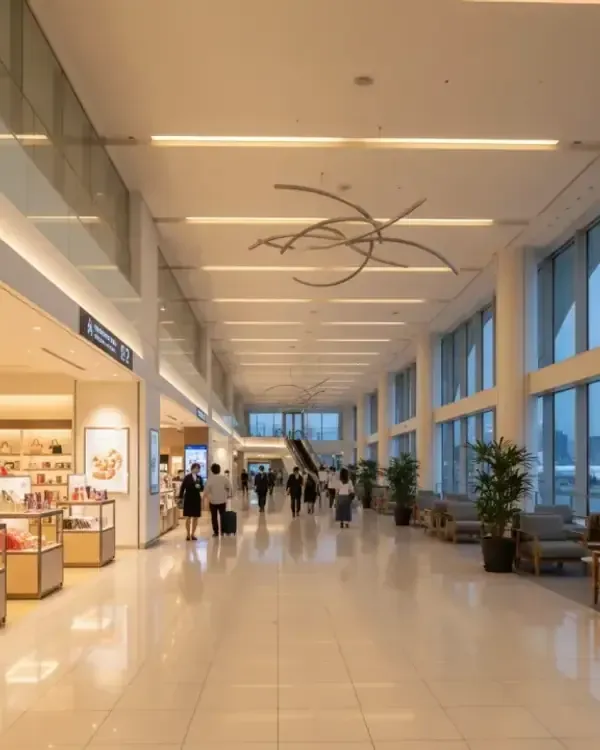
*Images are illustrative and may differ from actual airports and facilities. Entry rules and government systems change frequently. Always verify current requirements before you travel.
Who Needs a Visa (and Who Does Not)
For a holiday or a business-meeting trip, most Western travelers need no visa at all. South Korea grants visa-free entry to ordinary passport holders from a long list of countries, with the permitted stay set when you land. Americans, Britons, and Australians receive up to 90 days for tourism, visiting friends and relatives, or attending meetings.[5] Canadians do even better, with visa-free stays of up to 180 days under a bilateral arrangement, one of the longest allowances Korea offers anyone.[7]
The usual caveats apply. Visa-free entry never covers paid work, teaching, or commercial activity, and anyone planning to study or stay longer needs to arrange the right visa through a Korean embassy before flying.[7] Carry a passport valid for your whole stay, and keep your onward ticket and first accommodation address reachable, because both the arrival forms and the immigration officer may ask for them.
The K-ETA Pause, Explained
K-ETA, short for Korea Electronic Travel Authorization, is the country's online pre-screening for visa-free visitors, similar in spirit to the US ESTA. Here is the part that surprises people: it is currently switched off for the nationalities most likely to be reading this. To support its tourism push, Korea's Ministry of Justice has extended a temporary exemption that lets nationals of 22 countries and territories enter without applying, and the current extension runs from January 1 through December 31, 2026.[1] The list includes the United States, United Kingdom, Canada, Australia, New Zealand, Japan, Singapore, Hong Kong, Taiwan, and much of Western Europe, and the official K-ETA website confirms your status the moment you select your nationality.[1]
So why would anyone still apply? Because an approved K-ETA excuses you from the arrival card step entirely, which regular visitors find worth the small fee.[1] The application costs 10,000 won, roughly 7 to 8 US dollars, and reviews generally finish within 72 hours.[2] Approvals are valid for three years with multiple entries, capped at your passport's expiration date, and travelers aged 17 and under or 65 and over are exempt from K-ETA altogether.[2] If you visit Korea a few times a year, one application quietly removes a form from every future trip.
Mark the calendar, though. The US State Department notes that K-ETA enforcement is scheduled to resume on January 1, 2027, so a spring 2027 trip will need the authorization unless Korea extends the pause again.[5] If your travel dates straddle the new year, check the official site before booking.
The e-Arrival Card Is the New Must-Do
While K-ETA sits on pause, Korea rolled out the thing you actually need to plan for. The e-Arrival Card launched on February 24, 2025 as a digital replacement for the paper arrival card, and after a transition period through December 2025 the electronic form became the standard route for foreign visitors.[4] You submit it on the official portal, e-arrivalcard.go.kr, with your passport details, flight, and accommodation address.[3]
Timing matters more than the form itself. Submissions open three days before you enter Korea, counted in Korean Standard Time, so you can file on the day of arrival, one day before, or two days before.[4] A submission also goes stale if you do not enter within 72 hours, which is why filing a week early is not an option.[4] The sensible routine is to complete it right after online check-in opens for your flight. It costs nothing, takes a few minutes, and one person can file for a whole family in a single session, which also covers children under 14 who need an adult to submit on their behalf.[4]
Not everyone needs it. Travelers holding a valid K-ETA skip the e-Arrival Card completely, and so do foreign residents with a valid Korean registration card.[3] That is the clean way to think about the two systems in 2026: everyone files exactly one thing. Either you hold a K-ETA, or you file an e-Arrival Card in the three days before landing.
One warning worth repeating: the Government of Canada has flagged active online scams around the e-Arrival Card, and the real service is completely free.[6] The same goes for K-ETA, where look-alike sites charge several times the official 10,000 won fee. Type the government addresses directly and ignore sponsored search results.
Details That Trip People Up
- Have your address ready. The e-Arrival Card asks where you are staying, so book at least your first night and keep the hotel's name and address handy before you fill in the form.
- Do not double-file. If you hold a valid K-ETA, submitting an e-Arrival Card as well is unnecessary. Pick your path and stick with it.
- Old K-ETA approvals still count. Authorizations issued earlier remain valid until their own expiration dates, so check yours before paying for a new one. Fees are non-refundable.[1]
- Watch the 2027 line. Trips from January 1, 2027 onward are expected to need a K-ETA again, so year-end travelers should confirm the rules for their return dates.[5]
- Transit follows its own rules. If you are only connecting airside without clearing immigration, the arrival paperwork does not apply, but any planned entry into the city does require it.
Lounges and Layovers in Korea
Korea sits at the end of a long flight for most of these 22 exempt nationalities, and its main gateway rewards a bit of planning. Seoul Incheon (ICN) is routinely ranked among the world's best airports, and our Incheon lounge guide walks through the options terminal by terminal, including lounges open to Priority Pass members and premium cardholders. Heading beyond Seoul, Busan Gimhae (PUS) and Jeju (CJU) both have lounge options of their own, useful on the famously busy Seoul to Jeju shuttle.
If a new card is part of your trip prep, our roundup of travel credit cards with lounge access and the Priority Pass vs LoungeKey vs DragonPass comparison cover the main networks, and the best lounges in Asia guide sets expectations for the region. Pairing Korea with Japan? The Japan entry requirements guide covers the other half of that itinerary, and travelers tracking the global shift to electronic travel permits can compare Korea's approach with Europe's ETIAS and the UK ETA.
The Bottom Line
Entering South Korea in 2026 comes down to one form and one date. The form is the free e-Arrival Card, filed online in the three days before you land, unless a valid K-ETA already covers you.[3] The date is December 31, 2026, when the K-ETA exemption for the United States, United Kingdom, Canada, Australia, and 18 other countries is currently set to end.[1] Sort those two things, keep your accommodation details handy, and immigration at Incheon becomes one of the smoother arrivals in Asia, leaving your energy for the barbecue, the palaces, and the flight down to Jeju.
Information is reviewed periodically and was accurate at the time of writing. Entry requirements, exemptions, and government systems change frequently. Always verify current rules directly with the Korea Immigration Service, the official K-ETA and e-Arrival Card portals, and your own government's travel advice before traveling.
Frequently asked questions
- Do I need a K-ETA to visit South Korea in 2026?
- Not if you hold a passport from one of the 22 exempt countries, which include the United States, United Kingdom, Canada, Australia, New Zealand, Japan, Singapore, and most of Western Europe. South Korea's Ministry of Justice extended the temporary K-ETA exemption through December 31, 2026. You can still apply voluntarily for about 10,000 won if you want to skip the arrival card step, and the requirement is scheduled to return for everyone on January 1, 2027.
- What is the Korea e-Arrival Card and is it mandatory?
- The e-Arrival Card is South Korea's free online replacement for the paper arrival card, submitted at e-arrivalcard.go.kr in the three days before you arrive, based on Korean time. Paper cards were phased out after December 2025, so the electronic form is now the standard route for foreign visitors. You are exempt if you hold a valid K-ETA or a Korean residence card, and a family member can submit on behalf of children under 14.
- How long can I stay in South Korea without a visa?
- It depends on your passport. Americans, Britons, and Australians get up to 90 days visa-free for tourism, family visits, or business meetings. Canadians receive one of the most generous allowances anywhere, up to 180 days, under a bilateral arrangement with Korea. Paid work and commercial activity are not allowed on any visa-free entry, and immigration sets your permitted stay when you land.
- How much does the K-ETA cost and how long does it last?
- The official fee is 10,000 Korean won, roughly 7 to 8 US dollars, paid on the government site k-eta.go.kr. Approvals issued since July 2023 are valid for three years and cover multiple entries, though the approval expires with your passport if that comes first. Reviews generally finish within 72 hours, so apply at least three days before departure. Only use the official site, because look-alike sites charge heavy markups.
Sources
Factual claims in this article are sourced from the operator, airline, or airport authority pages below. AirportLounge.com does not republish copyrighted content from these sources; we link to them so readers can verify.
- [1]
- [2]
- [3]
- [4]
- [5]
- [6]
- [7]