Brazil eVisa Guide 2026: What US, Canadian, and Australian Travelers Need to Know
Quick answer
US, Canadian, and Australian passport holders need a Brazil eVisa to enter Brazil after the visa requirement was reinstated. It is a fully online application submitted through the official VFS Global portal, it is electronically linked to your passport once approved, and airlines check for it before they issue a boarding pass.
If you hold a US, Canadian, or Australian passport and you are flying to Brazil in 2026, you need a Brazil eVisa before you board. It is fully online, the fee is roughly $80.90 USD, processing usually lands inside five business days, and once approved it is electronically linked to your passport. US passport holders get a 10-year validity, Canadians and Australians get 5 years, and each visit allows up to 90 days with a 180-day annual cap.
Brazil quietly reintroduced its visa requirement for these three nationalities on April 10, 2025, ending the unilateral visa-free arrangement that had been in place since 2019. The decision was framed by the Itamaraty as a restoration of diplomatic reciprocity, since US, Canadian, and Australian visa rules for Brazilian citizens never softened. The eVisa platform launched ahead of the deadline, and by early 2026 the rollout is mature, airline checks at boarding are routine, and there is no "talk to the agent on arrival" workaround. If you show up without one, the airline will not issue a boarding pass.
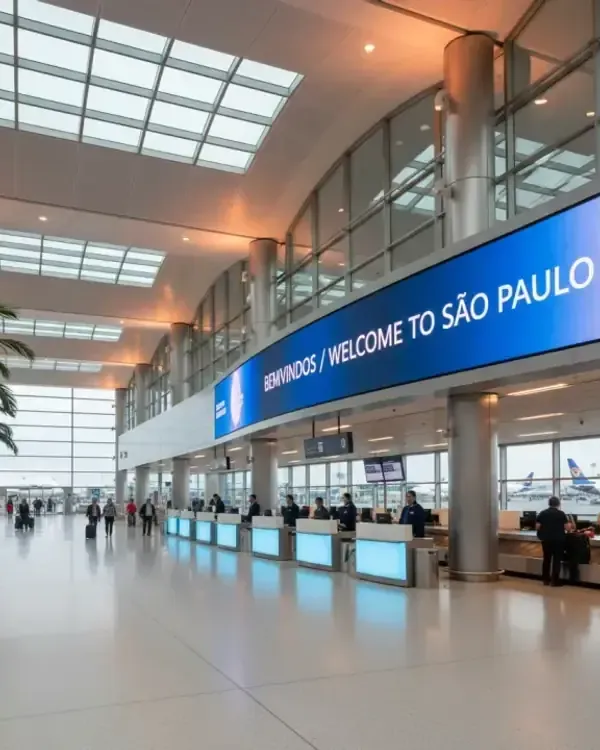
*Information here is summarized from publicly available sources, including the Brazilian Ministry of Foreign Affairs, the official VFS Global Brazil eVisa portal, and Delta Air Lines travel advisories. Rules, fees, and processing times can change without notice. Always verify the latest details on the official Brazil eVisa portal before you fly. Images are illustrative and may differ from actual lounges.
Who Needs a Brazil eVisa in 2026
The eVisa requirement applies to citizens of the United States, Canada, and Australia traveling to Brazil for tourism, business meetings, family visits, transit, or any short stay under 90 days. Japan was added to the same reciprocity discussion, and US, Canadian, and Australian passport holders are the three nationalities the VFS Global platform is open to today. If you carry a passport from a country still under the older visa-exemption list, you do not need an eVisa, but you still need a valid passport with at least six months of validity beyond your arrival date.
Dual nationals have a clean workaround. If you hold a US passport plus an EU, UK, or Brazilian passport, you can simply enter Brazil on the non-restricted document and skip the eVisa process. Travel on the same passport throughout, because Brazilian immigration cross-checks departure against entry stamps. The official application page sits at brazil.vfsevisa.com.
Cost, Validity, and Multiple Entries
The Brazil eVisa fee is $80 plus a $0.90 service surcharge, for a total of $80.90 USD. Payment is by Visa or Mastercard credit or debit card only. The fee is non-refundable, which matters because rejected applications do not get a partial refund, so it is worth taking the time to fill the form carefully.
Validity depends on your nationality. US passport holders receive a 10-year eVisa, while Canadians and Australians receive a 5-year eVisa. Within that window, you can enter Brazil multiple times. Each individual visit is capped at 90 days, and the cumulative total cannot exceed 180 days in any rolling 12-month period. That is generous for tourism and business, but it does not allow you to live in Brazil long-term or string together back-to-back visits without a break.
If your passport expires before your eVisa, the eVisa expires with it. There is no transfer between passports. Renew your passport early if it is close to the limit, then apply for a fresh eVisa before booking. If you compare this with the UK ETA or ETIAS for Europe, the Brazil version is more expensive and lasts longer, which makes it a better value if you are likely to visit Latin America repeatedly.
How to Apply: The Practical Walkthrough
Applications run through the VFS Global portal at brazil.vfsevisa.com. This is the only authorized platform. Plenty of lookalike sites rank in search results and charge a markup of $30 to $100 for a free-to-fill form, so read the URL carefully before paying. The official site is operated by VFS and clearly branded with the Brazilian Ministry of Foreign Affairs.
Register with your email, verify it through the confirmation link, then log in and start the application. The form asks for the basics: full name and personal details exactly as printed on your passport biographic page, current address, profession, parents' names, planned dates of travel, ports of entry, accommodation address in Brazil, and an emergency contact. You will upload a color scan of your passport biographic page and a recent ICAO-standard color photograph against a plain background. The application typically takes 20 to 40 minutes to complete carefully.
Processing usually finishes within five business days, with an official upper bound of ten working days. Approvals come by email, and the visa is digitally linked to the passport number you submitted. There is nothing to print and nothing physical mailed. Apply at least two to three weeks before your trip so you have buffer time if your application is pulled into manual review or if the upload of a passport scan fails the readability check.
Documents That Trip People Up
Most rejections are entirely avoidable. The single most common reason for delay is the photograph. The face must fill the frame in line with ICAO biometric standards, lighting should be flat and even, the background plain and light, and there should be no glasses, head coverings unless for religious reasons, or shadows on the face. A passport-style photo taken in a hotel room with mixed lighting will often get flagged. If you have the option, take the photo in daylight against a white wall, then crop tightly.
The second most common issue is mismatched data. Names with hyphens, apostrophes, accented characters, or compound surnames are easy to miscopy. The system requires an exact match to the machine-readable zone on your passport. Type carefully and re-read every field before payment. If you spot an error after submission, you cannot edit the application, but you can reapply with the corrected data. Reapplying means paying the fee again.
The portal may also ask for supporting documents during manual review, including proof of accommodation, a return or onward ticket, or evidence of sufficient funds. Most leisure applicants are not asked for these, but business travelers and those with prior US, Canadian, or Brazilian immigration touchpoints often are. Have a hotel booking confirmation and a roundtrip flight itinerary on file before you start.
Transit Through Brazil and Onward Travel
The eVisa is required for transit through a Brazilian international airport if your itinerary involves clearing immigration, which happens on any layover where you leave the airside zone or where you change carriers requiring a baggage reclaim. Single-ticket itineraries that route airside through Sao Paulo Guarulhos (GRU) or Rio de Janeiro Galeao (GIG) on the way to Argentina, Chile, or Peru still require an eVisa under the new rules, because Brazil applies its visa policy at the point of arrival regardless of onward connection.
If you are building a multi-country Latin America trip, this matters for cost reasons. A Buenos Aires plus Santiago itinerary that routes through Sao Paulo costs you the same $80.90 eVisa fee as a Rio-only trip, so plan the routing to make the Brazil stop count. Many travelers add a few days in Sao Paulo or Rio specifically because the eVisa is already paid. Browse our best airport lounges in South America 2026 guide if you want to map a layover plan around lounge time.
At GRU and GIG, the Policia Federal handle the passport check. With the eVisa on file, the experience is functionally identical to the pre-2025 visa-free entry, namely a quick scan, a stamp, and you are through. Officers may still ask basic questions about your stay, address, and onward ticket, so have those details easily accessible on your phone.
Other Brazil Entry Considerations for 2026
Outside the eVisa itself, a few points are worth tracking. Yellow fever vaccination is not mandatory for entry from most countries, but the Centers for Disease Control and Prevention still recommends it for travelers heading to the Amazon basin or to Brazilian states adjacent to risk zones. Plan it through a travel clinic at home rather than waiting for arrival.
Most card networks work everywhere in major cities, including contactless tap-to-pay on the Sao Paulo metro and at most restaurants, so a no-foreign-transaction-fee card from our cards directory is the most efficient way to pay. Carry a small reserve of cash for taxis, beach kiosks, and rural areas where terminals are less reliable.
Coordinating Brazil With Other 2026 Travel Authorizations
Many travelers in 2026 are juggling multiple new entry systems. The UK ETA for London, ETIAS for the Schengen area, the Brazil eVisa for Latin America, plus existing programs like Global Entry and NEXUS for the return home. Each program is independent, with its own portal, fee, and validity window. The good news is that all of them are designed for direct online application, so you can complete them yourself without an agent or service.
A practical checklist for a 2026 multi-region itinerary involving Brazil. First, confirm your passport has at least nine months of remaining validity, because most countries require six months and you want buffer. Second, apply for the Brazil eVisa before booking non-refundable hotels, in case of an unexpected refusal. Third, pair the trip with a card that handles airport lounge access and travel insurance, since long-haul South America itineraries often include overnight connections.
The Bottom Line
The Brazil eVisa is not a heavy lift. It is a single online form, an $80.90 fee, and a wait of about a week, after which you have 5 or 10 years of multi-entry access depending on your passport. The friction is almost entirely procedural, namely typing your name correctly, uploading a clean photo, and using the right portal. None of that needs to derail a trip if you build the application into your normal pre-travel checklist alongside booking your flights.
If you are heading to Sao Paulo Guarulhos, Rio de Janeiro Galeao, or onward through Brazil to anywhere in Latin America in 2026, get the eVisa application started two to three weeks before departure, double check every field, and then move on with planning the rest of the trip. The system is steady, predictable, and once you have an approval on file, you are not thinking about it again until your next renewal cycle.
Read our Best Airport Lounges in South America 2026 guide, browse the full airport directory, or compare cards with strong international coverage on the credit cards page.
Information is reviewed periodically. Always verify Brazil eVisa fees, eligibility, processing times, and supported nationalities on the official VFS Global portal and the Itamaraty website before travel. Rules on reciprocity-based visa programs can change, and ad-hoc exemptions during major events such as Carnival or World Cup hosting years may apply.
Frequently asked questions
- Who needs a Brazil eVisa?
- Ordinary passport holders from the United States, Canada, and Australia need one for tourism, business, transit, and short visits. There is no visa-on-arrival workaround, so you must have it approved before you travel.
- How do I apply and how long does it take?
- You apply online through the official VFS Global eVisa portal by creating an account, completing the form, uploading documents, and paying the fee. Approval commonly arrives within several business days, but apply well ahead to be safe.
- How long is the eVisa valid?
- Validity and the number of permitted days per visit are set by Brazil and can differ by nationality. Confirm the current validity period and per-visit stay limit on the official portal before you book travel.
Sources
Factual claims in this article are sourced from the operator, airline, or airport authority pages below. AirportLounge.com does not republish copyrighted content from these sources; we link to them so readers can verify.
- [1]
- [2]